Showing posts with label Doctrine and Theology. Show all posts

Saturday, October 31, 2009

95 Theses by Martin Luther


THE 95 THESES
by Martin Luther
1. When our Lord and Master Jesus Christ said, "Repent" (Mt 4:17), he willed the entire life of believers to be one of repentance.
2. This word cannot be understood as referring to the sacrament of penance, that is, confession and satisfaction, as administered by the clergy.
3. Yet it does not mean solely inner repentance; such inner repentance is worthless unless it produces various outward mortification of the flesh.
4. The penalty of sin remains as long as the hatred of self (that is, true inner repentance), namely till our entrance into the kingdom of heaven.
5. The pope neither desires nor is able to remit any penalties except those imposed by his own authority or that of the canons.
6. The pope cannot remit any guilt, except by declaring and showing that it has been remitted by God; or, to be sure, by remitting guilt in cases reserved to his judgment. If his right to grant remission in these cases were disregarded, the guilt would certainly remain unforgiven.
7. God remits guilt to no one unless at the same time he humbles him in all things and makes him submissive to the vicar, the priest.
8. The penitential canons are imposed only on the living, and, according to the canons themselves, nothing should be imposed on the dying.
9. Therefore the Holy Spirit through the pope is kind to us insofar as the pope in his decrees always makes exception of the article of death and of necessity.
10. Those priests act ignorantly and wickedly who, in the case of the dying, reserve canonical penalties for purgatory.
11. Those tares of changing the canonical penalty to the penalty of purgatory were evidently sown while the bishops slept (Mt 13:25).
12. In former times canonical penalties were imposed, not after, but before absolution, as tests of true contrition.
13. The dying are freed by death from all penalties, are already dead as far as the canon laws are concerned, and have a right to be released from them.
14. Imperfect piety or love on the part of the dying person necessarily brings with it great fear; and the smaller the love, the greater the fear.
15. This fear or horror is sufficient in itself, to say nothing of other things, to constitute the penalty of purgatory, since it is very near to the horror of despair.
16. Hell, purgatory, and heaven seem to differ the same as despair, fear, and assurance of salvation.
17. It seems as though for the souls in purgatory fear should necessarily decrease and love increase.
18. Furthermore, it does not seem proved, either by reason or by Scripture, that souls in purgatory are outside the state of merit, that is, unable to grow in love.
19. Nor does it seem proved that souls in purgatory, at least not all of them, are certain and assured of their own salvation, even if we ourselves may be entirely certain of it.
20. Therefore the pope, when he uses the words "plenary remission of all penalties," does not actually mean "all penalties," but only those imposed by himself.
21. Thus those indulgence preachers are in error who say that a man is absolved from every penalty and saved by papal indulgences.
22. As a matter of fact, the pope remits to souls in purgatory no penalty which, according to canon law, they should have paid in this life.
23. If remission of all penalties whatsoever could be granted to anyone at all, certainly it would be granted only to the most perfect, that is, to very few.
24. For this reason most people are necessarily deceived by that indiscriminate and high-sounding promise of release from penalty.
25. That power which the pope has in general over purgatory corresponds to the power which any bishop or curate has in a particular way in his own diocese and parish.
26. The pope does very well when he grants remission to souls in purgatory, not by the power of the keys, which he does not have, but by way of intercession for them.
27. They preach only human doctrines who say that as soon as the money clinks into the money chest, the soul flies out of purgatory.
28. It is certain that when money clinks in the money chest, greed and avarice can be increased; but when the church intercedes, the result is in the hands of God alone.
29. Who knows whether all souls in purgatory wish to be redeemed, since we have exceptions in St. Severinus and St. Paschal, as related in a legend.
30. No one is sure of the integrity of his own contrition, much less of having received plenary remission.
31. The man who actually buys indulgences is as rare as he who is really penitent; indeed, he is exceedingly rare.
32. Those who believe that they can be certain of their salvation because they have indulgence letters will be eternally damned, together with their teachers.
33. Men must especially be on guard against those who say that the pope's pardons are that inestimable gift of God by which man is reconciled to him.
34. For the graces of indulgences are concerned only with the penalties of sacramental satisfaction established by man.
35. They who teach that contrition is not necessary on the part of those who intend to buy souls out of purgatory or to buy confessional privileges preach unchristian doctrine.
36. Any truly repentant Christian has a right to full remission of penalty and guilt, even without indulgence letters.
37. Any true Christian, whether living or dead, participates in all the blessings of Christ and the church; and this is granted him by God, even without indulgence letters.
38. Nevertheless, papal remission and blessing are by no means to be disregarded, for they are, as I have said (Thesis 6), the proclamation of the divine remission.
39. It is very difficult, even for the most learned theologians, at one and the same time to commend to the people the bounty of indulgences and the need of true contrition.
40. A Christian who is truly contrite seeks and loves to pay penalties for his sins; the bounty of indulgences, however, relaxes penalties and causes men to hate them -- at least it furnishes occasion for hating them.
41. Papal indulgences must be preached with caution, lest people erroneously think that they are preferable to other good works of love.
42. Christians are to be taught that the pope does not intend that the buying of indulgences should in any way be compared with works of mercy.
43. Christians are to be taught that he who gives to the poor or lends to the needy does a better deed than he who buys indulgences.
44. Because love grows by works of love, man thereby becomes better. Man does not, however, become better by means of indulgences but is merely freed from penalties.
45. Christians are to be taught that he who sees a needy man and passes him by, yet gives his money for indulgences, does not buy papal indulgences but God's wrath.
46. Christians are to be taught that, unless they have more than they need, they must reserve enough for their family needs and by no means squander it on indulgences.
47. Christians are to be taught that they buying of indulgences is a matter of free choice, not commanded.
48 Christians are to be taught that the pope, in granting indulgences, needs and thus desires their devout prayer more than their money.
49. Christians are to be taught that papal indulgences are useful only if they do not put their trust in them, but very harmful if they lose their fear of God because of them.
50. Christians are to be taught that if the pope knew the exactions of the indulgence preachers, he would rather that the basilica of St. Peter were burned to ashes than built up with the skin, flesh, and bones of his sheep.
51. Christians are to be taught that the pope would and should wish to give of his own money, even though he had to sell the basilica of St. Peter, to many of those from whom certain hawkers of indulgences cajole money.
52. It is vain to trust in salvation by indulgence letters, even though the indulgence commissary, or even the pope, were to offer his soul as security.
53. They are the enemies of Christ and the pope who forbid altogether the preaching of the Word of God in some churches in order that indulgences may be preached in others.
54. Injury is done to the Word of God when, in the same sermon, an equal or larger amount of time is devoted to indulgences than to the Word.
55. It is certainly the pope's sentiment that if indulgences, which are a very insignificant thing, are celebrated with one bell, one procession, and one ceremony, then the gospel, which is the very greatest thing, should be preached with a hundred bells, a hundred processions, a hundred ceremonies.
56. The true treasures of the church, out of which the pope distributes indulgences, are not sufficiently discussed or known among the people of Christ.
57. That indulgences are not temporal treasures is certainly clear, for many indulgence sellers do not distribute them freely but only gather them.
58. Nor are they the merits of Christ and the saints, for, even without the pope, the latter always work grace for the inner man, and the cross, death, and hell for the outer man.
59. St. Lawrence said that the poor of the church were the treasures of the church, but he spoke according to the usage of the word in his own time.
60. Without want of consideration we say that the keys of the church, given by the merits of Christ, are that treasure.
61. For it is clear that the pope's power is of itself sufficient for the remission of penalties and cases reserved by himself.
62. The true treasure of the church is the most holy gospel of the glory and grace of God.
63. But this treasure is naturally most odious, for it makes the first to be last (Mt. 20:16).
64. On the other hand, the treasure of indulgences is naturally most acceptable, for it makes the last to be first.
65. Therefore the treasures of the gospel are nets with which one formerly fished for men of wealth.
66. The treasures of indulgences are nets with which one now fishes for the wealth of men.
67. The indulgences which the demagogues acclaim as the greatest graces are actually understood to be such only insofar as they promote gain.
68. They are nevertheless in truth the most insignificant graces when compared with the grace of God and the piety of the cross.
69. Bishops and curates are bound to admit the commissaries of papal indulgences with all reverence.
70. But they are much more bound to strain their eyes and ears lest these men preach their own dreams instead of what the pope has commissioned.
71. Let him who speaks against the truth concerning papal indulgences be anathema and accursed.
72. But let him who guards against the lust and license of the indulgence preachers be blessed.
73. Just as the pope justly thunders against those who by any means whatever contrive harm to the sale of indulgences.
74. Much more does he intend to thunder against those who use indulgences as a pretext to contrive harm to holy love and truth.
75. To consider papal indulgences so great that they could absolve a man even if he had done the impossible and had violated the mother of God is madness.
76. We say on the contrary that papal indulgences cannot remove the very least of venial sins as far as guilt is concerned.
77. To say that even St. Peter if he were now pope, could not grant greater graces is blasphemy against St. Peter and the pope.
78. We say on the contrary that even the present pope, or any pope whatsoever, has greater graces at his disposal, that is, the gospel, spiritual powers, gifts of healing, etc., as it is written, 1 Co 12[:28].
79. To say that the cross emblazoned with the papal coat of arms, and set up by the indulgence preachers is equal in worth to the cross of Christ is blasphemy.
80. The bishops, curates, and theologians who permit such talk to be spread among the people will have to answer for this.
81. This unbridled preaching of indulgences makes it difficult even for learned men to rescue the reverence which is due the pope from slander or from the shrewd questions of the laity.
82. Such as: "Why does not the pope empty purgatory for the sake of holy love and the dire need of the souls that are there if he redeems an infinite number of souls for the sake of miserable money with which to build a church? The former reason would be most just; the latter is most trivial.
83. Again, "Why are funeral and anniversary masses for the dead continued and why does he not return or permit the withdrawal of the endowments founded for them, since it is wrong to pray for the redeemed?"
84. Again, "What is this new piety of God and the pope that for a consideration of money they permit a man who is impious and their enemy to buy out of purgatory the pious soul of a friend of God and do not rather, because of the need of that pious and beloved soul, free it for pure love's sake?"
85. Again, "Why are the penitential canons, long since abrogated and dead in actual fact and through disuse, now satisfied by the granting of indulgences as though they were still alive and in force?"
86. Again, "Why does not the pope, whose wealth is today greater than the wealth of the richest Crassus, build this one basilica of St. Peter with his own money rather than with the money of poor believers?"
87. Again, "What does the pope remit or grant to those who by perfect contrition already have a right to full remission and blessings?"
88. Again, "What greater blessing could come to the church than if the pope were to bestow these remissions and blessings on every believer a hundred times a day, as he now does but once?"
89. "Since the pope seeks the salvation of souls rather than money by his indulgences, why does he suspend the indulgences and pardons previously granted when they have equal efficacy?"
90. To repress these very sharp arguments of the laity by force alone, and not to resolve them by giving reasons, is to expose the church and the pope to the ridicule of their enemies and to make Christians unhappy.
91. If, therefore, indulgences were preached according to the spirit and intention of the pope, all these doubts would be readily resolved. Indeed, they would not exist.
92. Away, then, with all those prophets who say to the people of Christ, "Peace, peace," and there is no peace! (Jer 6:14)
93. Blessed be all those prophets who say to the people of Christ, "Cross, cross," and there is no cross!
94. Christians should be exhorted to be diligent in following Christ, their Head, through penalties, death and hell.
95. And thus be confident of entering into heaven through many tribulations rather than through the false security of peace (Acts 14:22).

Thursday, September 17, 2009

Crazy for God

"Crazy for God: How I Grew Up as One of the Elect, Helped Found the Religious Right, and Lived to Take All (or Almost All) of It Back" by Frank Schaeffer
William H. Smith
Printer Friendly Version Email Link to a Friend
Image for Article

Crazy for God is a sassy, angry, honest, revealing, vulnerable, unsettling, insightful, frustrating book. In other words, it sums up Frank Schaeffer. It is not, however, the tell-all, reject-all book about his parents and evangelicalism that I thought it might be.

I do have serious misgivings. He has been accused of dishonoring his parents, especially his aged, impaired mother who is not able to defend herself. Reading the book is much like sitting in as a damaged child of famous parents unburdens himself to his therapist. If saying such things at all, or saying them in public, breaks the Fifth Commandment, then he is guilty, but I'm not ready to declare that this is the case.

As I read the book, the words of the psalmist, "If I had said, 'I will speak thus,' I would have betrayed the generation of your children" (Ps. 73:15), came to mind. The psalmist wrote honestly of his doubts only after they were resolved. But what if one has not resolved his doubts and no longer believes they can be resolved by any "answers"? Is he bound to hold his peace? I don't know.

Schaeffer's language is earthy. He uses both the "s" and "f" words freely. If Paul had this kind of thing in mind when he directed "let no corrupt communication come out of your mouth," then Schaeffer is guilty. It does seem that he could write a soul-baring book with the same punch with less frequent use of such language. That he uses it at all will offend many.

He is a man who is still angry with his parents for who they were, what they did, and how they reared him. But this book is not a hate-filled temper tantrum. He has come to terms with his experience of his father better than of his mother, but he has sincere affection for both. The descriptions of times of tenderness and intimacy with his father are moving. His appreciation of his mother's frustrations in marriage and life shows genuine empathy, while his sensitivity toward her in the times he spends with her in her frailty is admirable.

One reviewer has said that Schaeffer is obsessed with sex, but I don't think obsession is the right word. He has the fascination and conflicted feelings about sex that is not uncommon among those who grew up in fundamentalism. In addition, he has an excuse for his "level of interest," if he is telling the truth about his parents. His mother was unusually open with her children about her intimate marital relations (distinguishing her from the vast majority of fundamentalists) and his father's sexual needs were (shall we say) intense.

Schaeffer may be wrong in terms of the accuracy and balance of his memories and perceptions of his parents, but he does not seem motivated by a desire to smear and discredit them. His father had a temper, experienced periods of doubt and depression, was both indulgent and negligent toward his son, and allowed himself to be pushed by his son and others toward a political and public role that negated much of the good he had done earlier. His mother was vain, at times dismissive of his father, self-righteous, and for the most part (unlike her husband) blissfully unaware of her faults.

But Frank does not spare himself. He may confess his sexual sins with a little too much glee and be a bit too proud of his doubts, but for the most part he is honest-honest about his rebellion, his arrogance, his hypocrisy, his failures as a husband and a father, his intensity, and his impulsiveness.

He is also honest about his doubts and his rejections of the Christian faith. It is somewhat surprising that he is so honest about them inasmuch as he does not write to debunk faith. Most markedly he has his doubts about God, not an uncommon doubt to have but an uncommon one to admit. He has dismissed the inerrancy of the Bible as a view that can be sustained only by denying or explaining away the things that argue against it. He can no longer accept, and was never really comfortable with, the glib and formulaic expressions of Christian belief and practice so common among the old fundamentalists, the parachurch organizations, and the "faces" of current evangelicalism.

Yet he is not entirely without faith. He knows that his persistent search for meaning comes from somewhere. He does not expect to get closure in his search, but he takes even that as evidence of a universal quest for the infinite. He hopes that "maybe there is a God who forgives, who loves, who knows." Is this saving faith? Not exactly? He has not rejected Christian ethics, but, if anything, has become more consistent in their practice as he aged. Perhaps the fact that Frank cannot let go of his faith says he is in the grip of a God who will not let go of him.

He probably did not intend it to be so, but the book throughout points to the fundamental weakness of twentieth-century evangelicalism—its ecclesiology.

His father had little regard for the church as an historic and concrete institution. Both Francis Schaeffer and L'Abri were, like so many evangelical stars and all parachurch ministries, beyond the accountability to and the oversight of the church in her governing role. Revivalism, pietism, fundamentalism, liberalism, and spiritual pugilism had all done their parts in emasculating the church and putting the individual, his conscience, and his ministry outside the authority of the church. As Frank observes about his father, "Dad was our 'holy tradition.' He was bigger than any church." And so it is with them all.

The weakness in ecclesiology is revealed also in the church's worship. Frank got to the point that he could not put up with the tackiness of so much of evangelicalism. Take its music for an example: "How I wished that God had never made any men or women with a 'ministry in music.' I wish he would strike them all down so I'd never have to spend another minute listening to another fat lady (even the men were 'fat ladies' to me) sing another Jesus-is-my-boyfriend song synthesized to violins." Preach on, brother!

His father's funeral, which was held in a gym and not conducted by a minister, shows evangelical worship at its worst. "Dad's funeral embodied all the chaos, make-it-up-as-you-go insanity of evangelicalism. It was to funerals what 'personalized' weddings are to marriage, one where the young couple compose their own vows while some friend 'really like into guitar' provided the music."

One of the most insightful paragraphs in the book comes from Frank's experience of that funeral. "There is good reason we humans take refuge in the collective wisdom accumulated over time as expressed in the liturgies and cultural habits of long practice. And the arrogance of the Protestant notion that one's individual whims are equal to all occasions manifests itself in innumerable bad hair moments and in dreadful worship services, let alone innumerable do-it-yourself weddings. But funerals are supposed to be serious. Creativity isn't always good."

Frank Schaeffer regrets his role in the rise and development of the religious right, which is an example of the church getting confused about why it exists. This is a significant admission. I can remember thinking to myself in the 70s that his father had gone off the tracks with his Christian Manifesto and that Frank's A Time for Anger was over the top. The church then was guilty of hitching its wagon to the various horses of politics, and the faithful still do not always understand that the kingdom does not come about in this way.

He has rethought his position on abortion. He remains essentially conservative though no longer absolutist. He scorns and skewers the liberal position far more than the conservative, but he now thinks that it was a mistake in the wake of Roe v. Wade for evangelicalism to move to the "no abortion for any reason" position. I can remember being in a seminary class pre-Roe where there was a discussion of abortion. One student spoke of his wife's having had an abortion upon a doctor's recommendation, and there was no horror expressed. It still seems to me that it is impossible to draw a line, so it is safe and wise to mark the beginning of life and of its protection at conception, but we have got ourselves in a situation where rational discussion of national policy is impossible for either side.

For some reason Schaffer has turned sour and mean about Calvinism, identifying it with fundamentalism in its simplemindedness, rigidity, smug piety, and legalistic rules. On this he is wrong. But, perhaps, the problem is that he learned his Calvinism from his father, and his father never understood it either. Francis "didn't like" Calvin. Added to Frank's attribution of most of the things he doesn't like about his parents to Calvinistic sources, and I guess you can understand.

Surely the book needs to be answered, as Os Guinness has sought to do. But what we need first to do (and Guinness I think has tried) is to hear Schaeffer. We may not like it. It may make us uncomfortable. Heaven, forefend! It may make us think. But hear and think we must because he's telling us a lot of truth about ourselves.


Related ArticlesRelated Articles
Rate This Article Rate This Article
Rating: Majority voted that they would share this article with others. (2 Votes)

William H. Smith is pastor of Covenant Presbyterian Church (Louisville, Missouri).

Issue: "Discipleship: Wisdom for Pilgrims' Progress" Sept./Oct. Vol. 18 No. 5 2009 Pages 43-44

You are permitted and encouraged to reproduce and distribute this material in any format provided that you do not alter the wording in any way, you do not charge a fee beyond the cost of reproduction, and you do not make more than 500 physical copies. We do not allow reposting an article in its entirety on the Internet. We request that you link to this article from your website. Any exceptions to the above must be explicitly approved by Modern Reformation (webmaster@modernreformation.org).

Please include the following statement on any distributed copy: This article originally appeared in the [insert current issue date] edition of Modern Reformation and is reprinted with permission. For more information about Modern Reformation, visit www.modernreformation.org or call (800) 890-7556 (800) 890-7556. All rights reserved.

Absolute Sovereignty

I have become somewhat of a hermit blogger lately. I haven't posted, and I haven't been reading the posts of others. My mind has been too preoccupied. Last month I had minor surgery which caused me to develop pneumonia. It was also determined at that time that another surgery would be necessary; one with a much longer recovery period. I have been spending a good bit of time preparing physically and mentally for being laid up for awhile, so my need to blog had been put on the back burner. Today, I find myself needing to write in order to bring to the forefront some of my fears. I'm one of those people who worries without even realizing it. Everyone seems to know it but me. There's the obvious fear that I'll die, but that's not a fear of death as much as it is being concerned that the world (family & friends) can't survive without me....how silly is that?! I think that's at the heart of it all. I underestimate others' abilities to cope or handle situations without my aid. I need to let go of this idea of control; control which I have never really had. It's time to let God be sovereign over all things, even my kitchen and laundry.

Wednesday, July 22, 2009

Singing hymns half-heartedly without paying attention to the words or out of a sense of duty can be considered a form of taking the Lord's name in vain....

Monday, June 22, 2009

Seek the Old Paths

The following is an excerpt from an interview of Ken Meyers by Walter Henegar. For the full interview go to By Faith magazine Summer 2009 edition.

Q: Evangelicals today are often preoccupied with novelty: new strategies, new ministry models, new insights for successful Christian living. How do you address this?

A: C.S. Lewis said one of the distinctive aspects of the modern mind is the assumption that newer things are always better. We've become preoccupied with things we don't have rather than nurturing and stewarding the things we do have. My favorite example of this is the shift since the 1970s toward informality in public. People used to wear coats and ties to go to a baseball game, and now they wear a ball cap at church. We've moved away from formality toward informality in almost every area - language, dance, food, worship, music - and I'm convinced that it's largely a suspicion of authority. You don't want to submit to a set of standards and proprieties that you didn't freely choose. So, if the move toward informality expresses a widespread suspicion of authority, then why would that be a good, up-to-the-minute trend to endorse? Wendell Berry says we need to attend to the intrinsic meaning of things: "What is needed is a work of durable value; the time or age of it matters only after the value of it has been established." So, it's the value of the thing itself, not whether or not it's contemporary. Of course, it's good to be aware of the shape of what is contemporary, but that's no reason to give it the benefit of the doubt.

Sunday, March 29, 2009

Prayer


This morning, my dear husband showed me a website that shocked even me. Apparently, there is a site that will say your prayers for you for a fee so that you don't have to. I'm not talking about a paying a person to pray on your half; it's a computer that generates text into speech. Here's a snippet from the site:


  • Information Age Prayer is a subscription service utilizing a computer with text-to-speech capability to incant your prayers each day. It gives you the satisfaction of knowing that your prayers will always be said even if you wake up late, or forget.

The prayers of a righteous man availeth much....not the prayers of a computer. Mrs. Calla Lilly is not happy to see that....

Sunday, March 22, 2009

Because of my dear husband, I have developed a love of old hymns and the writings of our church fathers. The words are, more often than not, rich in meaning and doctrine. This morning the Heidelberg catechism was a great comfort to each member of our family as we recited it in unison with our brothers and sisters in Christ. The part that stood out to us in particular was in reference to what we believe about God.

I trust Him so that I do not doubt that He will provide whatever I need for body and soul, and that He will turn to my good whatever adversity He sends me in this world. ~ Question 26


I know a lot of people are turned off by old writings because they can be difficult to read, but it is worth the effort.

Monday, August 14, 2006

Sunday's Sermon Notes

"Woe to them! For they have gone in the way of Cain, have run greedily in the error of Balaam for profit, and perished in the rebellion of Korah." Jude 11

This New Testament writer presumes that the reader of this letter is well versed in the teachings of the Old Testament, but can that be said of today's reader? Unfortunately, most Christians could not tell you what the error of Balaam or the rebellion of Korah were. In fact, most evangelicals today could not name the 10 commandments, the twelve apostles, quote the golden rule or the great commission.

So many today cry, "Just give me Jesus" or "We only need the New Testament." I tell you, it is impossible to fully understand the New Testament without knowledge of the Old Testament. It is impossible to grasp the greatness of God's grace in Jesus' sacrifice without full knowledge of our inability to keep the Law. Posted by Picasa

Tuesday, August 01, 2006

Always Listen to Your Husband

I wish I had a scanner so that you could see for yourself the instructions my doctor wrote for me today. His number one, and he said most important, instruction for me was to always listen to my husband! Yes, you read that right, and he is a medical doctor. Let me explain.

I've been having quite a bit of foot trouble, so much so that I could not longer walk for exercise. I had an inkling as to the root cause: I am extremely flat-footed and very pigeon-toed. I had to wear corrective shoes (painful) until I was fourteen, at which point, I threw them off and walked barefoot whenever possible up until this point.

I didn't go to the doctor because I was afraid he would refer me to a podiatrist and yada, yada, yada: it would cost more money than I care to think about. I went only because my loving husband made me -- and my doctor knew it. Well, my doctor didn't refer me out, and, yes, my heel hurts so much because I'm flat-footed and because of over-use. He gave me lots of helpful instructions, etc., but the worst news that he gave me is that I should never go barefooted and that I must wear proper shoes - AT ALL TIMES. Yikes! That like being sentenced to looking nerdy the rest of my life.

You see, I have always been categorically opposed to wearing tennis shoes with skirts and dresses simply because it's more comfortable. I always felt like it was a bad testimony to look nerdy, and now I have my doctor (whose last name is Lord, ironically) ordering me to wear shoes with good support. This definitely calls for some internet research. Someone please tell me there are decent looking shoes out there for me!!! :)

Monday, July 17, 2006

Ignorance is Bliss

Do you ever wish that you didn't know certain things? Like Oreo cookies are bad for you? Or that your money seems to be quickly disappearing? Or that wars are going on? Or that red food coloring comes from bugs?

There are many things that I know, thanks in part to the internet, that I would be happier if I didn't know about them. True, these are things I might need to know for my well-being or safety, but they are not things things that put a smile on my face.

What does put a smile on my face is the knowledge that God is in control, and these items do not belong on my worry plate. God is sovereign and good and perfect in His wisdom and power. Posted by Picasa

Tuesday, May 16, 2006

Choosing Friends


James 4:4
4 You adulterous people! Do you not know that friendship with the world is enmity with God? Therefore whoever wishes to be a friend of the world makes himself an enemy of God.

Luke 5:30-32
30 And the Pharisees and their scribes grumbled at his disciples, saying, “Why do you eat and drink with tax collectors and sinners?” 31 And Jesus answered them, “Those who are well have no need of a physician, but those who are sick. 32 I have not come to call the righteous but sinners to repentance.”

The question has arisen as to whether or not one can be friends with non-Christians. There are two implied directives that can be drawn from the passages quoted above. The first is a stern warning against friendship with the world, and the second explains Jesus' association with the world.

In the James 4 passage, we are warned to not desire friendship with the world. II Corinthians 6:14-16 puts it this way: 14 Do not be unequally yoked with unbelievers. For what partnership has righteousness with lawlessness? Or what fellowship has light with darkness? 15 What accord has Christ with Belial? Or what portion does a believer share with an unbeliever? 16 What agreement has the temple of God with idols? For we are the temple of the living God; as God said,
“I will make my dwelling among them and walk among them,and I will be their God,and they shall be my people.17 Therefore go out from their midst,and be separate from them, says the Lord,and touch no unclean thing;then I will welcome you,18 and I will be a father to you,and you shall be sons and daughters to me,says the Lord Almighty.”


But what about the Luke passage where Jesus was obviously dining with unbelievers? Jesus' answer made His motives perfectly clear. He was seeking to draw them God and to repentance.

Being friends with a non-believer puts you in a precarious position. You can and should be a friend to them, but they cannot be a friend to you. Let me elaborate. We need to reach out to the world and be kind to them, but non-Christian are not the ones we should go to for advice or moral support. That type of close and intimate friendship should only be held with our brothers and sisters in Christ.

If you find yourself in a position where there are no other Christians to fellowship, may you truly be a light in the darkness.

Phillipians 2:12-16
12 Therefore, my beloved, as you have always obeyed, so now, not only as in my presence but much more in my absence, work out your own salvation with fear and trembling, 13 for it is God who works in you, both to will and to work for his good pleasure.
14 Do all things without grumbling or questioning, 15 that you may be blameless and innocent, children of God without blemish in the midst of a crooked and twisted generation, among whom you shine as lights in the world, 16 holding fast to the word of life, so that in the day of Christ I may be proud that I did not run in vain or labor in vain.Posted by Picasa

Tuesday, April 18, 2006

Do You Have God in a Box?

  Posted by Picasa


Do you have God in a neat little box and only let Him out on Sunday morning? With the business of life, it is all too easy to compartmentalize our faith and let it become only something to be checked off on our day planner or palm pilot. It is not enough to go to church on Sunday and have a daily "quiet time" and family devotions. If that is all your children are seeing, then they are not seeing the Christian life lived out before them as God intended. God is Lord over all, not just certain time slots of our lives. Our children need to see us praying without ceasing, seeking God's wisdom in every area of our lives. Our faith is something that is to flow out naturally in everything that we do, most importantly in our conversation. It should also govern the conversations that we allow into our homes through the media.

Love the Lord your God with all your heart and with all your strength. These commands that I give you today are to be upon your hearts. Impress them on your children. Talk about them when you sit at home and when you walk along the road, when you lie down and when you get up. Tie them as symbols on your hands and bind them on your foreheads. Write them on the doorframes of your houses and on your gates. Dueteronomy 6:5-9

Friday, October 28, 2005

Tell Me the Old, Old Story

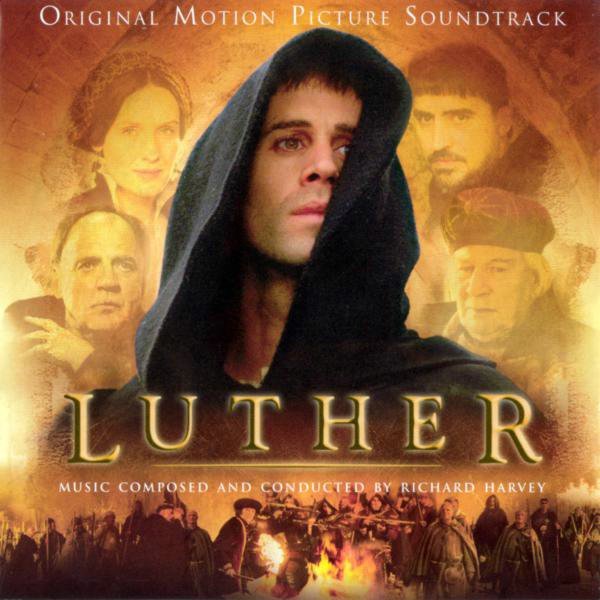
Today, we had our foster daughter watch the Luther movie to give her a better understanding of the reformation. While watching the film, she asked if those who were taught error during that time, were in heaven or hell. It is so exciting to have her ask us such serious questions. It seems as though not a day passes that she doesn't ask us something about God or our faith. We take such discussions with our biological daughter for granted because she has grown up in the faith (at the ripe old age of 15). She has been taught these truths since she was a babe. For our new, foster daughter, these ideas are fresh and thought provoking. She truly grapples with her faith and the doctrines of God. These truths should be just as exciting to us, no matter what our spiritual age. Posted by Picasa

Monday, October 24, 2005

Do We Need Reformation in the Church Today?

Posted by Picasa
THE 95 THESES
by Martin Luther
1. When our Lord and Master Jesus Christ said, "Repent" (Mt 4:17), he willed the entire life of believers to be one of repentance.
2. This word cannot be understood as referring to the sacrament of penance, that is, confession and satisfaction, as administered by the clergy.
3. Yet it does not mean solely inner repentance; such inner repentance is worthless unless it produces various outward mortification of the flesh.
4. The penalty of sin remains as long as the hatred of self (that is, true inner repentance), namely till our entrance into the kingdom of heaven.
5. The pope neither desires nor is able to remit any penalties except those imposed by his own authority or that of the canons.
6. The pope cannot remit any guilt, except by declaring and showing that it has been remitted by God; or, to be sure, by remitting guilt in cases reserved to his judgment. If his right to grant remission in these cases were disregarded, the guilt would certainly remain unforgiven.
7. God remits guilt to no one unless at the same time he humbles him in all things and makes him submissive to the vicar, the priest.
8. The penitential canons are imposed only on the living, and, according to the canons themselves, nothing should be imposed on the dying.
9. Therefore the Holy Spirit through the pope is kind to us insofar as the pope in his decrees always makes exception of the article of death and of necessity.
10. Those priests act ignorantly and wickedly who, in the case of the dying, reserve canonical penalties for purgatory.
11. Those tares of changing the canonical penalty to the penalty of purgatory were evidently sown while the bishops slept (Mt 13:25).
12. In former times canonical penalties were imposed, not after, but before absolution, as tests of true contrition.
13. The dying are freed by death from all penalties, are already dead as far as the canon laws are concerned, and have a right to be released from them.
14. Imperfect piety or love on the part of the dying person necessarily brings with it great fear; and the smaller the love, the greater the fear.
15. This fear or horror is sufficient in itself, to say nothing of other things, to constitute the penalty of purgatory, since it is very near to the horror of despair.
16. Hell, purgatory, and heaven seem to differ the same as despair, fear, and assurance of salvation.
17. It seems as though for the souls in purgatory fear should necessarily decrease and love increase.
18. Furthermore, it does not seem proved, either by reason or by Scripture, that souls in purgatory are outside the state of merit, that is, unable to grow in love.
19. Nor does it seem proved that souls in purgatory, at least not all of them, are certain and assured of their own salvation, even if we ourselves may be entirely certain of it.
20. Therefore the pope, when he uses the words "plenary remission of all penalties," does not actually mean "all penalties," but only those imposed by himself.
21. Thus those indulgence preachers are in error who say that a man is absolved from every penalty and saved by papal indulgences.
22. As a matter of fact, the pope remits to souls in purgatory no penalty which, according to canon law, they should have paid in this life.
23. If remission of all penalties whatsoever could be granted to anyone at all, certainly it would be granted only to the most perfect, that is, to very few.
24. For this reason most people are necessarily deceived by that indiscriminate and high-sounding promise of release from penalty.
25. That power which the pope has in general over purgatory corresponds to the power which any bishop or curate has in a particular way in his own diocese and parish.
26. The pope does very well when he grants remission to souls in purgatory, not by the power of the keys, which he does not have, but by way of intercession for them.
27. They preach only human doctrines who say that as soon as the money clinks into the money chest, the soul flies out of purgatory.
28. It is certain that when money clinks in the money chest, greed and avarice can be increased; but when the church intercedes, the result is in the hands of God alone.
29. Who knows whether all souls in purgatory wish to be redeemed, since we have exceptions in St. Severinus and St. Paschal, as related in a legend.
30. No one is sure of the integrity of his own contrition, much less of having received plenary remission.
31. The man who actually buys indulgences is as rare as he who is really penitent; indeed, he is exceedingly rare.
32. Those who believe that they can be certain of their salvation because they have indulgence letters will be eternally damned, together with their teachers.
33. Men must especially be on guard against those who say that the pope's pardons are that inestimable gift of God by which man is reconciled to him.
34. For the graces of indulgences are concerned only with the penalties of sacramental satisfaction established by man.
35. They who teach that contrition is not necessary on the part of those who intend to buy souls out of purgatory or to buy confessional privileges preach unchristian doctrine.
36. Any truly repentant Christian has a right to full remission of penalty and guilt, even without indulgence letters.
37. Any true Christian, whether living or dead, participates in all the blessings of Christ and the church; and this is granted him by God, even without indulgence letters.
38. Nevertheless, papal remission and blessing are by no means to be disregarded, for they are, as I have said (Thesis 6), the proclamation of the divine remission.
39. It is very difficult, even for the most learned theologians, at one and the same time to commend to the people the bounty of indulgences and the need of true contrition.
40. A Christian who is truly contrite seeks and loves to pay penalties for his sins; the bounty of indulgences, however, relaxes penalties and causes men to hate them -- at least it furnishes occasion for hating them.
41. Papal indulgences must be preached with caution, lest people erroneously think that they are preferable to other good works of love.
42. Christians are to be taught that the pope does not intend that the buying of indulgences should in any way be compared with works of mercy.
43. Christians are to be taught that he who gives to the poor or lends to the needy does a better deed than he who buys indulgences.
44. Because love grows by works of love, man thereby becomes better. Man does not, however, become better by means of indulgences but is merely freed from penalties.
45. Christians are to be taught that he who sees a needy man and passes him by, yet gives his money for indulgences, does not buy papal indulgences but God's wrath.
46. Christians are to be taught that, unless they have more than they need, they must reserve enough for their family needs and by no means squander it on indulgences.
47. Christians are to be taught that they buying of indulgences is a matter of free choice, not commanded.
48 Christians are to be taught that the pope, in granting indulgences, needs and thus desires their devout prayer more than their money.
49. Christians are to be taught that papal indulgences are useful only if they do not put their trust in them, but very harmful if they lose their fear of God because of them.
50. Christians are to be taught that if the pope knew the exactions of the indulgence preachers, he would rather that the basilica of St. Peter were burned to ashes than built up with the skin, flesh, and bones of his sheep.
51. Christians are to be taught that the pope would and should wish to give of his own money, even though he had to sell the basilica of St. Peter, to many of those from whom certain hawkers of indulgences cajole money.
52. It is vain to trust in salvation by indulgence letters, even though the indulgence commissary, or even the pope, were to offer his soul as security.
53. They are the enemies of Christ and the pope who forbid altogether the preaching of the Word of God in some churches in order that indulgences may be preached in others.
54. Injury is done to the Word of God when, in the same sermon, an equal or larger amount of time is devoted to indulgences than to the Word.
55. It is certainly the pope's sentiment that if indulgences, which are a very insignificant thing, are celebrated with one bell, one procession, and one ceremony, then the gospel, which is the very greatest thing, should be preached with a hundred bells, a hundred processions, a hundred ceremonies.
56. The true treasures of the church, out of which the pope distributes indulgences, are not sufficiently discussed or known among the people of Christ.
57. That indulgences are not temporal treasures is certainly clear, for many indulgence sellers do not distribute them freely but only gather them.
58. Nor are they the merits of Christ and the saints, for, even without the pope, the latter always work grace for the inner man, and the cross, death, and hell for the outer man.
59. St. Lawrence said that the poor of the church were the treasures of the church, but he spoke according to the usage of the word in his own time.
60. Without want of consideration we say that the keys of the church, given by the merits of Christ, are that treasure.
61. For it is clear that the pope's power is of itself sufficient for the remission of penalties and cases reserved by himself.
62. The true treasure of the church is the most holy gospel of the glory and grace of God.
63. But this treasure is naturally most odious, for it makes the first to be last (Mt. 20:16).
64. On the other hand, the treasure of indulgences is naturally most acceptable, for it makes the last to be first.
65. Therefore the treasures of the gospel are nets with which one formerly fished for men of wealth.
66. The treasures of indulgences are nets with which one now fishes for the wealth of men.
67. The indulgences which the demagogues acclaim as the greatest graces are actually understood to be such only insofar as they promote gain.
68. They are nevertheless in truth the most insignificant graces when compared with the grace of God and the piety of the cross.
69. Bishops and curates are bound to admit the commissaries of papal indulgences with all reverence.
70. But they are much more bound to strain their eyes and ears lest these men preach their own dreams instead of what the pope has commissioned.
71. Let him who speaks against the truth concerning papal indulgences be anathema and accursed.
72. But let him who guards against the lust and license of the indulgence preachers be blessed.
73. Just as the pope justly thunders against those who by any means whatever contrive harm to the sale of indulgences.
74. Much more does he intend to thunder against those who use indulgences as a pretext to contrive harm to holy love and truth.
75. To consider papal indulgences so great that they could absolve a man even if he had done the impossible and had violated the mother of God is madness.
76. We say on the contrary that papal indulgences cannot remove the very least of venial sins as far as guilt is concerned.
77. To say that even St. Peter if he were now pope, could not grant greater graces is blasphemy against St. Peter and the pope.
78. We say on the contrary that even the present pope, or any pope whatsoever, has greater graces at his disposal, that is, the gospel, spiritual powers, gifts of healing, etc., as it is written, 1 Co 12[:28].
79. To say that the cross emblazoned with the papal coat of arms, and set up by the indulgence preachers is equal in worth to the cross of Christ is blasphemy.
80. The bishops, curates, and theologians who permit such talk to be spread among the people will have to answer for this.
81. This unbridled preaching of indulgences makes it difficult even for learned men to rescue the reverence which is due the pope from slander or from the shrewd questions of the laity.
82. Such as: "Why does not the pope empty purgatory for the sake of holy love and the dire need of the souls that are there if he redeems an infinite number of souls for the sake of miserable money with which to build a church? The former reason would be most just; the latter is most trivial.
83. Again, "Why are funeral and anniversary masses for the dead continued and why does he not return or permit the withdrawal of the endowments founded for them, since it is wrong to pray for the redeemed?"
84. Again, "What is this new piety of God and the pope that for a consideration of money they permit a man who is impious and their enemy to buy out of purgatory the pious soul of a friend of God and do not rather, because of the need of that pious and beloved soul, free it for pure love's sake?"
85. Again, "Why are the penitential canons, long since abrogated and dead in actual fact and through disuse, now satisfied by the granting of indulgences as though they were still alive and in force?"
86. Again, "Why does not the pope, whose wealth is today greater than the wealth of the richest Crassus, build this one basilica of St. Peter with his own money rather than with the money of poor believers?"
87. Again, "What does the pope remit or grant to those who by perfect contrition already have a right to full remission and blessings?"
88. Again, "What greater blessing could come to the church than if the pope were to bestow these remissions and blessings on every believer a hundred times a day, as he now does but once?"
89. "Since the pope seeks the salvation of souls rather than money by his indulgences, why does he suspend the indulgences and pardons previously granted when they have equal efficacy?"
90. To repress these very sharp arguments of the laity by force alone, and not to resolve them by giving reasons, is to expose the church and the pope to the ridicule of their enemies and to make Christians unhappy.
91. If, therefore, indulgences were preached according to the spirit and intention of the pope, all these doubts would be readily resolved. Indeed, they would not exist.
92. Away, then, with all those prophets who say to the people of Christ, "Peace, peace," and there is no peace! (Jer 6:14)
93. Blessed be all those prophets who say to the people of Christ, "Cross, cross," and there is no cross!
94. Christians should be exhorted to be diligent in following Christ, their Head, through penalties, death and hell.
95. And thus be confident of entering into heaven through many tribulations rather than through the false security of peace (Acts 14:22).

Saturday, October 01, 2005

Am I Ready For Worship?

Posted by Picasa


Hebrews 10:19-22

19 Therefore, brothers, since we have confidence to enter the holy places by the blood of Jesus, 20 by the new and living way that he opened for us through the curtain, that is, through his flesh, 21 and since we have a great priest over the house of God, 22 let us draw near with a true heart in full assurance of faith, with our hearts sprinkled clean from an evil conscience and our bodies washed with pure water.

Saturdays should be typically spent in preparation for the Sabbath, but I wonder if we really prepare rightly - or even at all. It has been said that we only prepare for what is truly important, so I often wonder how much we truly value our Sundays. Sure, most of us show up for church on Sunday with the assumption that we are ready for worship, but somehow I doubt that most of us are truly prepared.

I chose to post the above passage because it covers both the inward and outward aspects of readying ourselves to approach God aright. I have always been taught that it was important to put on our best clothes on Sunday, always having our shoes polished and our hair neatly arranged out of respect and reverence for a holy God, but what about our hearts?

Heart preparation is so much harder. Yes, most of us would agree that having a quiet time before church is a good idea, but there is so much more to it than that. Do I have one holy passion when I enter God's presence? Am I resting in His sovereignty, or is my mind wandering to the many duties of the week that lie before me, or am I noticing what someone else is wearing (or not wearing, as the case may be)? Am I harboring some small sin in my heart, unwilling to give it up just yet? Or have I strayed so far that attending church is just another thing to check off of my list of duties and I do not even think of preparation?

Perhaps our lives seem so frazzled that we believe we do not have time to prepare for worship and that God should just be happy that we made it to Sunday morning services. If we are honest with ourselves and with God, there is time, and God's plan of the Sabbath rhythm for our lives is restful and joyful. Yes, it does require sacrifice - the sacrifice of sin in our lives. Am I so far gone that I do not want to present myself holy and blameless before God? God forbid! I know in my heart that I have much to answer for before God where my heart is concerned; how about you?

Tuesday, August 16, 2005

Are You Sure?

Posted by Picasa


Do you look at pornography? Are you sure about that? According to Rosaleigh DeRossett of Moody Bible Institute, pornography is anything that airbrushes the truth. For men, that would be the visual images that we normally associate with pornography. But for women, this would be romance novels, including the all too popular Christian versions. But wait, you may say, what's wrong with them.

In particular, Christian romance novels paint an all too glitzy, unattainable, and romanticized picture of marriage and love complete with rose covered cottages and heroines that are young, thin, with dreamy skin with rose tinted cheeks that allude to the blush of innocence, lush hair, etc., and heroes that are strong, good looking, say the right thing and always wisk the heroine away for a happily ever after.

Sounds nice, but it causes young girls and women to have expectations that will never be realized. This, in turn, leads to discontent and frustration. Marriage is hard enough work without placing on your husband the expectation of living up to that type of heroism.

What do you think? Please comment and let me know your thoughts.

I realize that DeRossett's definition of porn is extreme, but it did give me much to think about in regards to what I allow into my life. Dare I carry this line of thought over into chick-flicks? Yikes! How would I get my ironing done? :) Heaven forbid that I might be forced to listen to a sermon or something. :)

Saturday, June 25, 2005

Retail and religion: Friars hold Mass, hear confession at the mall

 Posted by Hello


COLORADO SPRINGS, Colo. (AP) -- Amanda Zkiab visits The Citadel Mall four or five times a week, but the 25-year-old isn't there to scour the sale racks, stuff herself with food-court goodies or cruise for a date.

Zkiab bypasses the shops and goes straight to the Catholic Center, which offers Mass, confession and spiritual guidance in a place where people normally worship couture and pray they haven't reached their credit limit. Even the rosaries are free.

"It's so convenient, there's no excuse," Zkiab said one afternoon after Mass. "When I'm done, it's like, 'Oh, I can shop."'
... (Please click on the link above for the full article.)

I'm not too sure about this one. I like the idea of someone being available at a "church" during the week, as most churches in the U.S. are locked during the week and some even go so far as to gate their parking lots. I would also like the idea of a daily service (I am not Catholic). What I don't like about this idea is that it smacks of a "drive through" church. Also, have we gotten so far away from God that He has to plumb the depths of hell to find us? I am afraid that as a society we have done just that.

Thursday, June 23, 2005

Ants and Elephants

 Posted by Hello


Brian McLaren: When we "do theology," we are clay pots pondering the potter, kids pondering their father, ants discussing the elephant. At some level of profundity and accuracy, we are bound to be inadequate or incomplete all the time, in almost anything we say or think, considering our human limitations, including language, and God's infinite greatness.

D.A. Carson: Here it is again: the absolute antithesis. Either we can know God exhaustively, or we are restricted to the mysterious. Of course it always true that we cannot know God exhaustively: we are not omniscient. God is infinitely greater than we are. Moreover, the best of the modernist theologians were among the most adamant on this point. It did not take postmodernism to discover that God is infinitely greater than we and in that sense forever remains mysterious. But although the comparison of elephants and ants is helpful at one level, it overlooks the fact that in this case the ants have been made in the image of the elephant, and this elephant has not only communicated with the ants in ant-language, but has also, in the person of his Son, become an "ant" while remaining an "elephant."....
p. 129

Friday, June 17, 2005

True Love

 Posted by Hello


What would you say if a man said he loved his wife simply because she cooks and cleans for him? Would you say that man truly loved his wife? Most people would say, "no." Why then, do people say that they love Jesus or God but claim they do not need to know Him more fully? How can you genuinely love someone of whom you know nothing of their character? Simply stated, you cannot. So the next time you find yourself or an acquaintance saying they do not need theology or doctrine to love Jesus, search out your heart to see if there is any truth to that statement. God would not have us be ignorant. Come to know Him better and have a real genuine relationship with God.

Tuesday, May 17, 2005

Silent Preparation

Posted by Hello


"In the period before the service we commend the keeping of silence. In the midst of our busy lives we have all too little time for silence. 'It is seldom.' writes one Christian, 'that God finds a soul quiet enough to speak to.' The silence before the service can be used as a time for quiet preparation. Read thoughtfully the words of the opening hymn, so that when you join in the singing of it, it may mean more to you. Think of the holiness and power of God into whose presence we should only with humility and reverence. 'Be still, and know that I am God.'"

All too often we have entered into worship lightly. We glibly slide into our favorite pew and chat about Sunday School with our family members. A friend comes over and asks how we are or whether or not we caught such and such on TV. And so it goes. We call it fellowshiping, but, in reality, it is our disrespect for the God of the universe whom we claim to have come to worship. Sometimes we attempt to properly prepare for worship, but, more often than not, our minds wander to the events of the week, things we forgot to do, and people we need to call. We have not entered a Sabbath rest. We have not prepared as we ought.

Sabbath preparation does not begin on Sunday morning or even Saturday evening. Traditional Sabbath begins on Saturday evening just as the Jewish day goes from evening to evening rather than morning to morning - meaning we need to have all preparations made beforehand. Our clothes and tithe should be ready before we retire for bed at a reasonable hour. We should allow enough time on Sunday morning for getting our hearts ready rather than just our bodies (preaching to self here) lest we be "whitened sepulchers." The Sabbath and the worship therein is a joyous occasion and a great gift from God that we should embrace. To not prepare for worship at home and in the sanctuary is to turn one's nose up at the gift of God. This weekend, take time to prepare for worship and receive what God has for you. If we do not quiet our hearts, how can we hear Him?